The 7-Day Strike: A Follow-Up System That Actually Converts
The fortune is in the follow-up. But most investors have no system for it.
You made the call. Had a decent conversation. The seller said "maybe" or "let me think about it." You told yourself you'd follow up next week.
Three weeks later, someone else bought the house.
This happens constantly. Not because investors are lazy, but because they don't have a system. They rely on memory, sticky notes, and good intentions. And good intentions don't close deals.
The 7-Day Strike is the second discipline of The Mantis Method. It's a structured 7-day follow-up cadence designed to convert warm leads into signed contracts.
Why 7 Days?
Seven days is the sweet spot for motivated seller follow-up:
- Short enough to stay relevant. The seller still remembers you.
- Long enough to create multiple touchpoints without harassment.
- Structured enough to be repeatable across every deal.
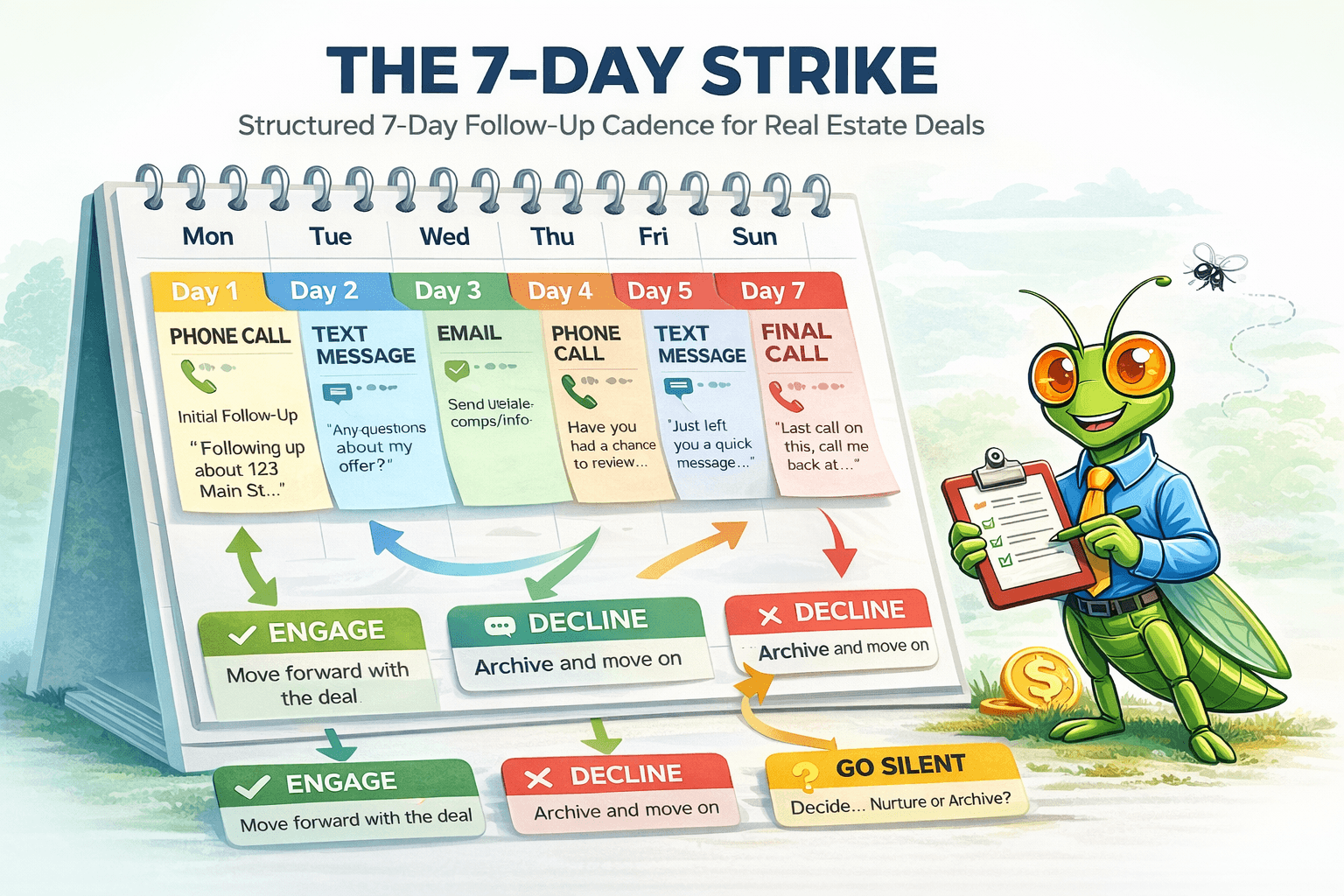
After 7 days of consistent follow-up, one of three things will happen:
- They engage - You move forward with the deal
- They decline - You archive and move on
- They go silent - You decide whether to nurture or archive
No more wondering "should I call again?" The system tells you exactly what to do and when.
The 7-Day Strike Cadence
Each day has a specific purpose and channel. The mix of phone, text, email, and voicemail keeps you visible without being repetitive.
| Day | Channel | Purpose | Example |
|---|---|---|---|
| Day 1 | Phone Call | Initial outreach or follow-up from conversation | "Following up on our conversation about 123 Main St..." |
| Day 2 | Text Message | Quick, low-pressure check-in | "Hi [Name], just checking if you had any questions about my offer." |
| Day 3 | Provide value or additional info | Send comps, timeline overview, or answer anticipated questions | |
| Day 4 | Phone Call | Direct conversation attempt | "Wanted to see if you've had a chance to review the numbers..." |
| Day 5 | Voicemail | Leave a message if no answer (don't call again) | "Hi [Name], just leaving a quick message. Call me back at..." |
| Day 6 | Text Message | Soft close or temperature check | "Is this still something you're considering? Happy to answer any questions." |
| Day 7 | Final Call | Decision point - pursue, nurture, or archive | "Last call on this - let me know either way so I can update my notes." |
Channel Strategy
The channel mix isn't random. Different channels serve different purposes:
Phone Calls (Days 1, 4, 7)
Phone calls are high-effort, high-reward. They're the only channel where you can have a real conversation, handle objections, and close. Use them strategically at the beginning, middle, and end of the strike.
Text Messages (Days 2, 6)
Texts are low-pressure and high-response. Many sellers prefer texting. Keep them short, friendly, and easy to reply to. One question max.
Email (Day 3)
Email is for delivering value. Send comps, process explanations, or answers to questions they might have. This positions you as professional and prepared.
Voicemail (Day 5)
If you've called twice without an answer, leave one voicemail. Not two. Not three. One. Make it count. Be brief, be clear, include a callback number.
When to Start a Strike
Not every lead gets a 7-Day Strike. Save it for qualified opportunities:
| Start a Strike When... | Skip the Strike When... |
|---|---|
| You've had a meaningful conversation | They clearly said "no" or "not interested" |
| They expressed any level of motivation | Wrong number or bad contact info |
| You've submitted an offer and are waiting | No equity or unrealistic expectations |
| They said "call me back" or "let me think" | Property doesn't fit your buy box |
The Strike is for warm leads, not cold ones. Don't waste the cadence on people who have already said no.
What Happens After Day 7?
Day 7 is decision day. Based on the seller's response (or lack thereof), you take one of three actions:
1. Pursue (Hot)
They're engaged, asking questions, or ready to move forward. Continue the conversation. Schedule an appointment. Push toward contract.
2. Nurture (Warm)
They're not ready now, but there's potential. Add them to a monthly check-in list. Set a reminder for 30 days. Don't abandon, but don't pursue aggressively.
3. Archive (Cold)
No response after 7 touches. They've gone dark or clearly aren't interested. Remove from active pipeline. You can always resurrect later if circumstances change.
The key is making a decision. Too many investors leave leads in limbo forever. The Strike forces resolution.
Tracking Your Strikes
For the Strike to work, you need to know:
- What day each lead is on
- Which touches have been completed
- When the next action is due
- Notes from each touchpoint
This is where most investors fail. They start strong on Day 1, forget Day 3, and by Day 5 they've lost track entirely.
A proper tracking system shows you:
| Lead | Day | Today's Action | Status |
|---|---|---|---|
| 123 Main St | Day 3 | Send email with comps | Due Today |
| 456 Oak Ave | Day 6 | Text - temperature check | Due Today |
| 789 Pine Rd | Day 7 | Final call - decision point | Critical |
Common Mistakes
1. Skipping Days
The cadence works because of consistency. Skipping Day 3 because "I'll just call tomorrow" breaks the rhythm. Stick to the schedule.
2. Being Pushy
The Strike is persistent, not aggressive. Each touch should add value or move the conversation forward. "Just checking in" repeatedly is annoying. Vary your approach.
3. Not Documenting
Every touch should include notes. What did they say? What objections came up? What's their timeline? This information compounds across the Strike and helps you close.
4. Running Too Many Strikes
If you have 50 active Strikes, you'll drop balls. Start with what you can manage. Five to ten active Strikes is plenty for most solo investors.
How FlipMantis Automates This
The FlipMantis Strike Tracker manages your 7-Day Strikes automatically:
- Visual timeline: See exactly where each deal is in the cadence
- Daily task list: Know exactly which touches are due today
- One-click logging: Mark touches complete with a single click
- Outcome tracking: Record responses and next steps
- Auto-archiving: Stale Strikes get flagged for decision
No more spreadsheets. No more forgotten follow-ups. Just a system that tells you what to do and when.
Start Your First Strike
Pick your hottest lead right now. The one you've been meaning to follow up with. Set up a simple tracker:
- Write down Days 1-7 with the channel for each
- Start Day 1 today
- Check off each day as you complete it
- Make a decision on Day 7
One Strike, one week, one decision. That's it.
The 7-Day Strike is the second discipline of The Mantis Method. Combined with the 20-5-1 Rule, you now have pipeline activity and follow-up covered. But how do you know which leads deserve the most attention? That's where Signal Sensei comes in.
Get The Complete Mantis Method Playbook
Download the free PDF guide with all three disciplines, weekly tracking templates, and the complete system for consistent deal flow.
Available on The Mantis Method page.